
The best way to log a gym session.
Logging a gym session well is a habit, not a chore — and the habit lives or dies on friction. Here's the minimum effective dose that gives you real data without eating your rest periods.
Working sets only
Skip warm-ups. The dataset that matters is your working sets — weight, reps, and ideally RPE. Everything else is noise.
Log between sets, not after
Logging at the end of the session is logging from memory — i.e. logging wrong. Tap it in during your rest.
Auto-fill is non-negotiable
Your tracker should pre-load last session's weights. Re-typing 100kg from scratch every Wednesday is how habits die.
What to record (the minimum that's actually useful)
Exercise, weight, reps. That's the floor. Add RPE if you train near failure — it's the single most useful subjective signal for autoregulating volume.
Skip metrics you won't review: tempo notation, bar speed, rest-to-the-second. They feel rigorous; they're almost never decision-changing for non-competitive lifters.
When to log
Log the set as soon as you re-rack. Your working memory is reliable for about 30 seconds — past that, reps blur and you'll "round up". By the time you're driving home, the data is fiction.
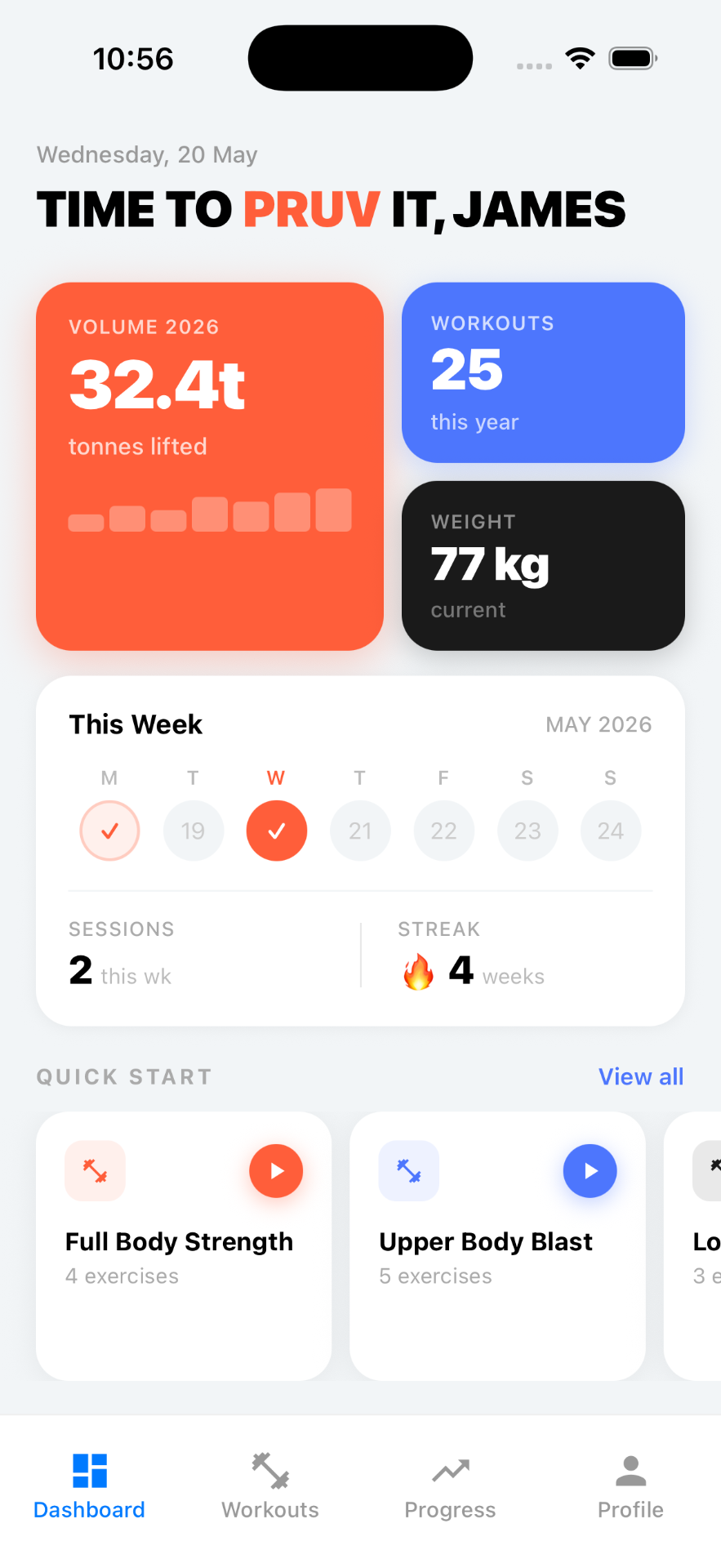
PRUV's log is built to be tapped one-handed between sets with the bar still chalked. That's what "between sets, not after" actually requires in practice.
Why a real tracker beats a notes app
A notes app stores what you wrote. A workout tracker stores what you wrote and tells you what it means: PRs flagged in real time, volume per muscle group, strength curves per lift.
Same logging effort, more output. That's the entire pitch.
Frequently asked
Should I log warm-ups?
Optional. Most lifters only log working sets, which is enough for progressive overload tracking. Log warm-ups only if you're rehabbing or tracking ramp-up speed deliberately.
Notes app or dedicated tracker?
Notes apps work for the first month, then fall apart — no analytics, no comparison, no PR detection. A dedicated workout tracker like PRUV turns the same effort into a usable history.
How long should logging take?
Under 10 seconds per set. If your tracker takes longer, you'll quit it. Auto-fill from last session and one-handed taps are the difference between a log you maintain and one you abandon.
Log smart.
Train smarter.
Join the waitlist and let PRUV handle the friction.
By submitting your email you agree to receive launch updates from PRUV. Unsubscribe at any time.
Follow us on Instagram @pruvapp