
The progressive overload app that shows the numbers.
Progressive overload is simple in theory and brutal in practice: lift more than last time. PRUV is the progressive overload app that watches your weight, reps and volume on every set — so you stop guessing and start proving.
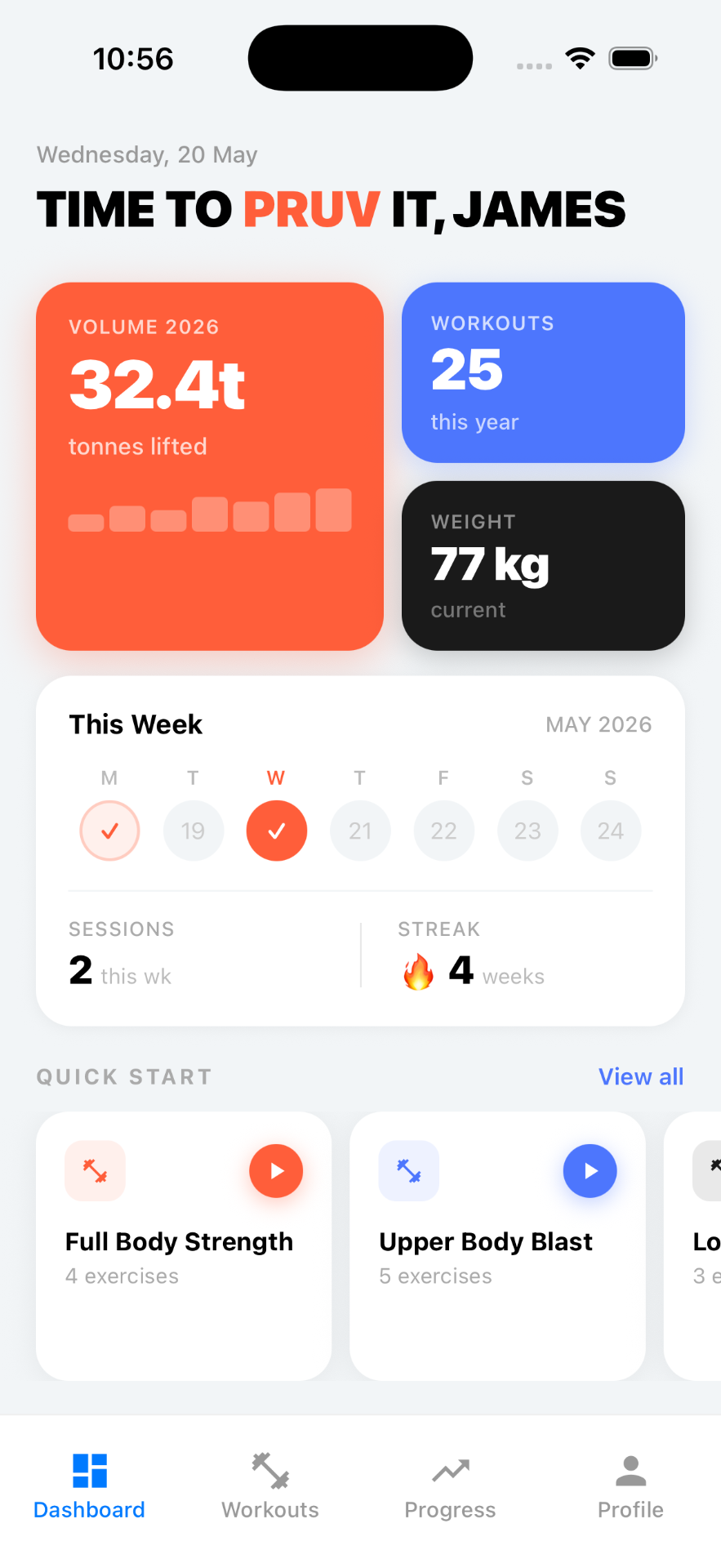
Volume tracked per set
Weight × reps × sets, totalled live as you train. The session bar fills as you lift — overload becomes a number, not a feeling.
Top-set comparisons
Every working set is compared against your previous best on the same lift. Beat it, and PRUV flashes a PR alert mid-session.
Per-exercise strength curves
See how your bench, squat or deadlift has actually moved over weeks and months — not just the last session.
Why progressive overload needs a real tracker
Progressive overload is the single most predictive driver of strength and hypertrophy. It is also the easiest thing in training to fool yourself about — "that felt heavier" is not the same as "that was heavier".
A progressive overload tracker replaces feel with evidence. PRUV stores every set you've ever logged, then charts weight, reps and volume for every lift in your plan, so you can see what is going up.
Frequently asked
What is a progressive overload app?
A progressive overload app records the weight, reps and volume you lift on every exercise — then shows whether each lift is actually getting heavier, harder or more frequent over time. Without a progressive overload app, overload is a feeling. With one, it's a chart.
How does PRUV track progressive overload?
PRUV records your top working weight, reps and session volume (weight × reps × sets) on every exercise, and charts them over time — so you can see for yourself whether each lift is moving. No spreadsheets required.
Is PRUV a progressive overload app for iPhone and Android?
Yes. PRUV is a mobile-first progressive overload tracker for both iOS and Android, so you can log a set in the rack and see the overload chart update in seconds.
Do I need to log every set?
Yes — PRUV is built to make logging a set take a few seconds. The more sets you record, the more accurate progressive overload tracking becomes. Auto-filled weights from the last session mean you usually only change the reps.
Does PRUV work for any rep range?
Yes. Heavy strength work (1–5 reps), hypertrophy (6–15), endurance (15+) — PRUV tracks all of it and charts your progress at whichever rep range you train in.
Stop guessing.
Track the overload.
Join the waitlist and PRUV your progressive overload from day one.
By submitting your email you agree to receive launch updates from PRUV. Unsubscribe at any time.
Follow us on Instagram @pruvapp